
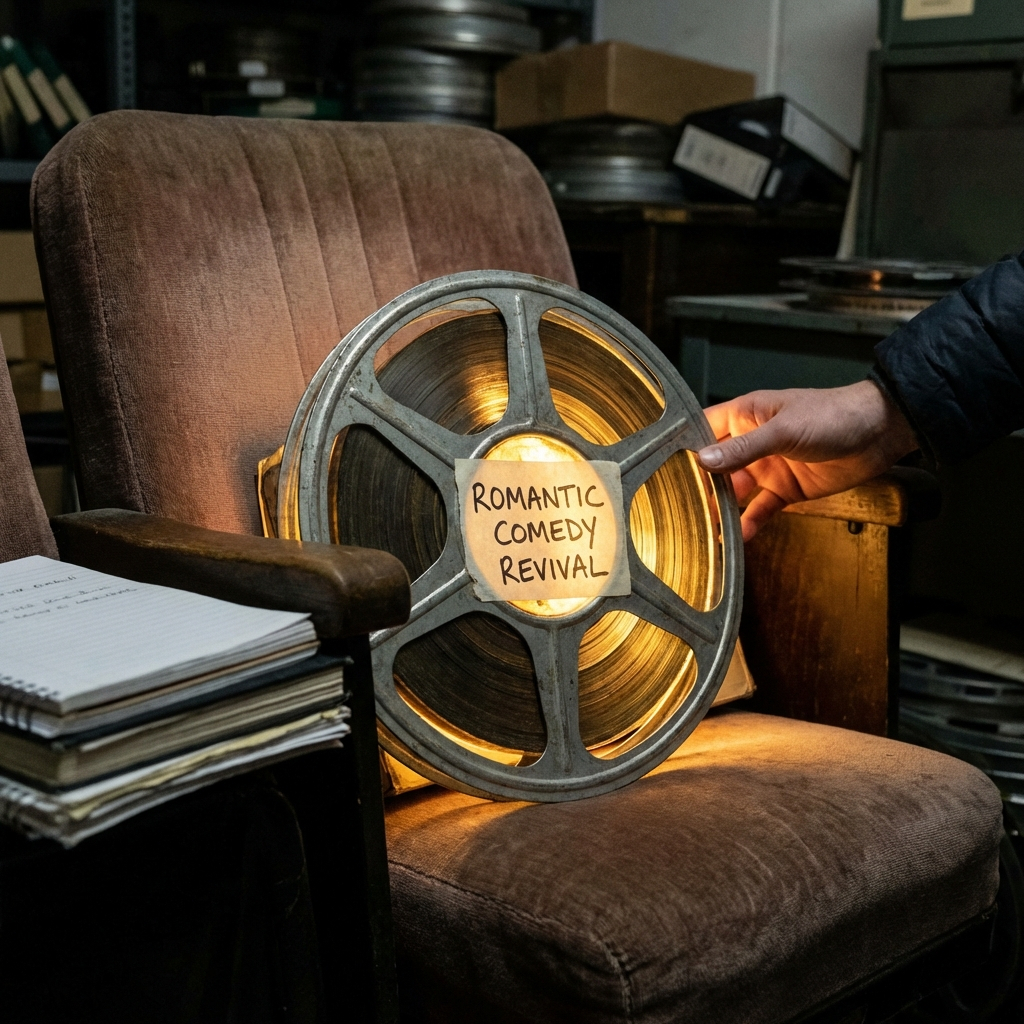
TL;DR: Rom-com releases dropped 67% since 2001 as studios chose franchise safety over original storytelling. Post-pandemic isolation created demand for genuine human connection that superhero films don’t satisfy. Reviving romantic comedies with psychological depth addresses societal needs (loneliness, AI anxiety, burnout) while rebuilding cinema’s extinct mid-budget ecosystem. Filmmakers should partner with psychologists and build community support before approaching distributors.
Quick Answer
-
Studios abandoned rom-coms for franchises because they’re easier to market, but 62% of audiences now prefer original stories over sequels
-
The pandemic created a loneliness gap that romantic comedies are uniquely positioned to fill with genuine human connection
-
Rom-coms built on the hero’s journey framework paired with psychological insights deliver entertainment plus emotional healing
-
Mid-budget films ($30-50M) offer better risk-reward ratios than tentpole blockbusters, as proven by “Crazy Rich Asians” ($30M budget, $238M gross)
-
Community-first strategy: Build grassroots support with targeted audiences before seeking studio distribution
I’ve been watching cinema eat itself alive for the past decade.
Studios keep churning out franchise installments nobody asked for. Audiences show up out of habit, not excitement. The mid-budget film—the space where romantic comedies once thrived—has nearly vanished.
The numbers tell a brutal story: rom-com releases dropped from 76 in 2001 to just 25 in 2017. That’s a 67% collapse.
Here’s what nobody’s saying: this isn’t about one genre dying. It’s about cinema forgetting what it’s supposed to do.
Why Did Studios Abandon Romantic Comedies?
The shift happened quietly, then all at once.
Studios realized they could pre-frame audience expectations with franchises. When you see a Marvel logo, you know exactly what you’re getting. Action. Quips. A post-credits scene teasing the next installment.
There’s no risk in that equation.
Romantic comedies require selling a new story every single time. You can’t build a cinematic universe around two people falling in love. Each film stands or falls on its own merit.
So studios made a calculated bet: why create something new when you can extend what already works?
The Equalizer got three films. John Wick got four. The DC and Marvel universes spawned dozens of interconnected stories.
The problem? Audiences are exhausted.
Recent research reveals only 29% of consumers keep up with most or all entries in a franchise. Meanwhile, 56% say too many releases feel repetitive, and 62% would prefer original stories over another sequel.
Bottom line: Studios went on autopilot. Audiences are tuning out.
What Created the Opening for Rom-Coms to Return?
The Pandemic Changed Everything
COVID-19 changed something fundamental in how people relate to stories.
We spent months isolated. Relationships strained under the weight of uncertainty. Human connection became something we couldn’t take for granted anymore.
This created an opening for romantic comedies.
The genre offers exactly what people are missing: genuine human connection, emotional vulnerability, and stakes that feel real. Not world-ending threats. Not CGI spectacle. Just two people trying to figure out if they belong together.
That’s not escapism. That’s recognition.
Romantic comedies could do more than entertain. They could heal.
You could structure a rom-com around the hero’s journey (the same framework Disney used in Tarzan and The Lion King) but make the psychological transformation explicit instead of implicit.
Start with a protagonist dealing with post-pandemic isolation. Show them struggling to share vulnerability with others. Take them through adventures and mishaps. Let them discover what’s been blocking real connection.
You’re watching a romantic comedy. You’re also watching someone learn to be human again.
What this means for filmmakers: The comedy makes difficult truths easier to accept. The romance makes the stakes personal. The psychological structure underneath does the real work.
What Are Audiences Really Craving?
People know something’s wrong with cinema. They just can’t articulate what.
It’s like being fed fast food for years and forgetting what a real meal tastes like. You know you’re unsatisfied. You know something’s missing. But you can’t quite name it.
The current cinematic diet consists of spectacle without substance. Fancy effects. Fast cuts. Gimmicks designed to hold attention for 120 minutes without leaving anything behind.
People want to feel stories, not just watch them.
They want transformational storytelling. They want to leave the theater changed, not just distracted.
This is an unconscious need right now. Most audiences can’t express that they’re longing for deeper structural levels in their entertainment.
But they’re starting to realize something’s missing.
Filmmakers have a responsibility here. We created this problem by chasing profit over purpose. We fix it by remembering what storytelling is for.
Key insight: Audiences feel the absence but lack words to describe their hunger for substance.
Do Rom-Coms Make Financial Sense?
The rom-com decline makes no financial sense.
Mid-budget films historically offered studios a profitable, lower-risk model. Movies like “Crazy Rich Asians” ($30 million budget, $238 million gross) prove the model still works.
But studios abandoned it anyway.
The logic goes like this: mid-budget movies carry more risk than low-budget films but don’t offer the massive returns of tentpole blockbusters. So why bother?
This thinking destroyed an entire ecosystem.
Legal dramas like “A Few Good Men.” Coming-of-age stories like “Dead Poets Society.” Romantic comedies like “The Proposal.” All migrated to streaming or disappeared entirely.
Matt Damon explained it perfectly: without DVD sales, films like “The Talented Mr. Ripley” and “The Informant”—his bread and butter—became economically unviable. So he started showing up in Thor movies instead. 😉
The mid-budget space is where careers get built. Where writers experiment. Where diverse stories get told without needing to justify a $200 million budget.
When that space vanishes, cinema becomes a binary: tiny overly artsy indies or massive franchises. Nothing in between.
Romantic comedies could rebuild that middle ground. They don’t require elaborate sets or expensive effects. They need good writing, compelling actors, and emotional honesty.
The reality: Studios stopped believing in a sustainable model because they’re chasing blockbuster returns instead of consistent profitability.
Why Aren’t Streaming Rom-Coms Enough?
Romantic comedies didn’t die. They moved.
While theaters abandoned the genre, streaming platforms embraced it. Netflix’s “To All the Boys I’ve Loved Before” became an instant hit, spawning two sequels and countless imitators.
The demand exists. The supply just shifted to a different medium.
But streaming creates its own problems.
When your goal becomes completion rate instead of cultural impact, scripts shift toward safety. Safe pacing. Safe jokes. Safe character arcs.
The algorithm punishes boldness that disrupts engagement flow.
Romance without risk starts feeling predictable. The very thing that made romantic comedies special—their ability to surprise you with genuine emotion—gets smoothed out in favor of metrics.
The theatrical experience matters for transformative rom-coms.
Going to the cinema creates a ritual. You plan it. You travel there. You sit in darkness with complete focus for 90 to 120 minutes.
That intentionality deepens the psychological impact. You worked for this experience. You created an event around it.
Streaming offers convenience and reach. But it can’t replicate that immersive intensity.
The solution: Design romantic comedies for the cinematic experience while ensuring they still deliver transformative impact at home.
What Themes Should Modern Rom-Coms Explore?
If we’re serious about reviving romantic comedies with psychological depth, we need to address what people are actually dealing with.
Isolation is obvious. Post-pandemic loneliness created a hunger for connection that franchises can’t satisfy.
But there are other themes begging for exploration.
Irrelevance anxiety driven by artificial intelligence. People watching their jobs get automated. Wondering if they still matter. A romantic comedy about two people finding value in each other while the world tells them they’re obsolete? That resonates.
Burnout culture accelerated by technology. We were promised AI would free up our time. Instead, it just raised expectations. Now you can do more, so you should do more. A rom-com about two overworked people learning to be present with each other? That’s medicine disguised as entertainment.
You create multiple films addressing the same theme from different angles. Each one explores a different facet of the human experience.
The approach: Collaborate with psychologists. Start with the psychological need. Build the hero’s journey around it. Add romantic comedy elements to make the medicine go down easier.
How Do You Get Studios to Take Rom-Coms Seriously?
Studios want proof before they’ll embrace this approach. But you can’t get proof without making the films first.
That’s the catch-22.
Filmmakers need to bypass traditional gatekeepers and go directly to communities.
Say you’re making a romantic comedy about two people dealing with serious health conditions—cancer and multiple sclerosis. That’s 20 million people worldwide who have personal experience with those challenges.
Reach out to patient organizations. Get community buy-in before approaching distributors.
Build grassroots support. Create proof of concept through engagement, not box office numbers.
Then take that community backing to Netflix, Amazon, HBO Max, or Disney. Show them there’s a passionate audience waiting for this story.
The power shift: You’re not asking permission. You’re demonstrating demand. Creating a movement before creating the movie.
What Does Success Look Like in 5 Years?
Five years from now, if this rom-com renaissance actually happens, what changes?
We go back to the roots.
Films like “Groundhog Day” prove you can balance entertainment with genuine character transformation. The rom-com golden era from 1999 to 2005 showed the genre’s potential before studios abandoned it.
Success means creating a new standard for quality.
Audiences leave theaters feeling transformed, not just distracted. They’re satisfied and fulfilled instead of vaguely disappointed.
That feeling—of being genuinely moved by a story—becomes normal again.
We rebuild the mid-budget ecosystem. Writers get to experiment. Diverse stories get told. Actors build careers without needing to join a franchise.
Cinema remembers its purpose: not just to entertain, but to help us understand what it means to be human.
The fancy effects don’t matter. The fast cuts don’t matter. The interconnected universes don’t matter.
Great storytelling matters.
Structure matters. Character transformation matters. Emotional honesty matters.
Romantic comedies could lead this shift because they’re uniquely positioned to do so. They’re accessible without being shallow. They’re entertaining without being empty.
Why this matters: The most interesting story is always about two people figuring out if they belong together. Not a small thing. Everything.
What Should Filmmakers Do Now?
Studios won’t lead this change. They’re too invested in the franchise model, too risk-averse to bet on something unproven.
The responsibility falls on filmmakers and producers.
We need to be bold. Trust ourselves. Create box office successes that prove the model works.
Collaborate with psychologists to identify current psychological crises. Structure stories using the hero’s journey framework. Add romantic comedy elements that make the medicine go down easier.
Build community support before seeking distribution.
Share the work directly with people who need these stories. Let them become advocates.
This approach combines the best of two worlds: the true purpose of storytelling with sustainable profitability.
It’s not easy. It requires bringing a new paradigm to an industry stuck on autopilot.
But the alternative is watching cinema continue eating itself. Watching audiences grow more disconnected. Watching the mid-budget ecosystem disappear completely.
Romantic comedies won’t save cinema by themselves. But they could remind us what cinema is supposed to do.
Tell stories that matter. Create characters we care about. Leave audiences feeling something real.
Final word: Not nostalgia. Necessity.
Frequently Asked Questions
Why did romantic comedies disappear from theaters?
Studios shifted to franchise-based filmmaking because pre-established universes (Marvel, DC) require less marketing effort. Rom-coms need fresh stories every time, making them harder to market despite their consistent profitability.
Are romantic comedies still profitable?
Yes. “Crazy Rich Asians” cost $30 million and grossed $238 million. Mid-budget rom-coms offer better risk-reward ratios than $200 million tentpole films. Studios abandoned them despite profitability, not because of it.
How do streaming rom-coms differ from theatrical ones?
Streaming platforms optimize for completion rates, leading to safer scripts. Algorithms punish boldness. Theatrical releases create rituals and intentionality, deepening psychological impact through immersive focus.
What psychological themes work best for modern rom-coms?
Post-pandemic isolation, AI-driven irrelevance anxiety, and technology-accelerated burnout culture. These themes address real societal needs while maintaining entertainment value through romance and comedy.
How do filmmakers prove rom-coms work without studio support?
Build grassroots community support first. For a rom-com about cancer patients, engage the 20 million people affected worldwide. Show distributors there’s proven demand before asking for funding.
What’s the hero’s journey approach to rom-coms?
Start with a psychological need (isolation, burnout). Structure the protagonist’s transformation through adventures and mishaps. Make the internal change explicit rather than implicit. Add comedy and romance to make the medicine easier to swallow.
Will rom-coms alone fix cinema’s problems?
No. But they remind the industry what storytelling is for: creating genuine human connection, emotional transformation, and cultural impact. They rebuild the extinct mid-budget ecosystem where diverse stories thrive.
Why does the theatrical experience matter for transformative rom-coms?
Going to the cinema creates ritual and intentionality. You plan it, travel there, sit in complete focus for 90-120 minutes. This investment deepens the psychological impact compared to at-home streaming.
Key Takeaways
-
Rom-com releases collapsed 67% from 2001 to 2017 because studios chose franchise safety over original storytelling, despite rom-coms offering better risk-reward ratios.
-
Post-pandemic isolation created unprecedented demand for stories about genuine human connection, emotional vulnerability, and relatable stakes.
-
Combining the hero’s journey structure with psychological insights (via psychologist collaboration) transforms rom-coms into healing entertainment that addresses societal needs.
-
The mid-budget film ecosystem ($30-50M) is nearly extinct, but rom-coms could rebuild it by proving consistent profitability without requiring $200M budgets.
-
Filmmakers should bypass traditional gatekeepers by building grassroots community support with targeted audiences before approaching distributors.
-
Streaming platforms optimize for completion rates rather than cultural impact, making theatrical releases essential for truly transformative storytelling experiences.
-
Success means audiences leave theaters feeling transformed rather than distracted, rebuilding trust between cinema and viewers through emotional honesty and great storytelling.