
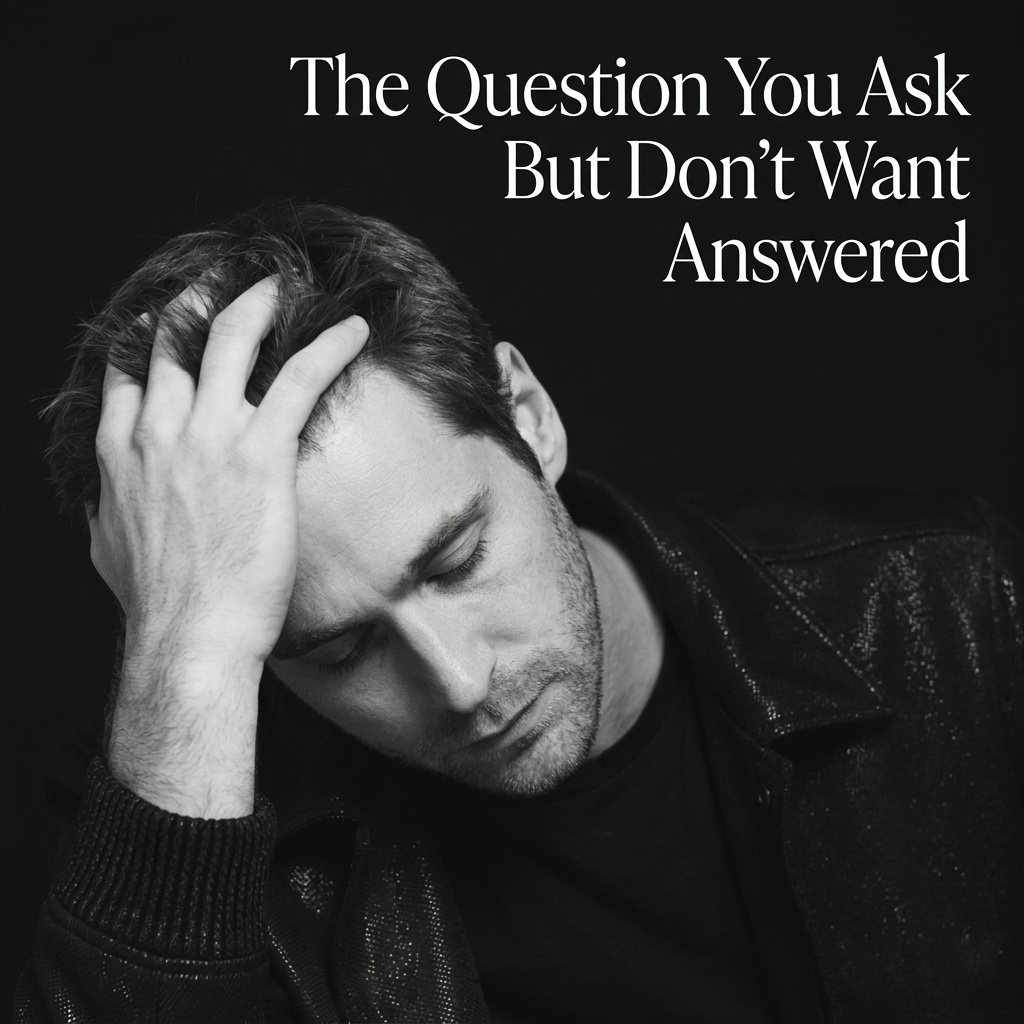
TL;DR: We ask meaningful questions but fail to listen to the answers, turning genuine inquiry into performance. This creates emotional harm equivalent to physical pain and erodes trust in relationships. The fix is simple: if you ask, wait for the answer.
Core insights:
-
Asking questions without listening communicates “you don’t matter” and activates the same brain regions as physical pain
-
Only 2% of people are skilled at active listening, yet 60% of workplace failures stem from poor listening
-
Real listening creates inter-brain synchrony, a neurological bond that technology can’t replicate
-
The solution: if you’re not interested in the answer, don’t ask the question
What Performative Curiosity Looks Like
Someone asks how your new job is going.
You start to answer. Mid-sentence, their eyes drift. They check their phone. Or they interrupt with their own story about their career transition three years ago.
The question wasn’t a question. It was theater.
I’ve watched this pattern repeat across family dinners, professional meetings, coffee with friends. The setting changes. The behavior stays the same.
Someone poses a meaningful question, then vanishes before the answer arrives.
Why Deeper Questions Get Less Attention
Here’s what I notice: the deeper the question, the faster people disappear.
“How are you handling your father’s illness?”
“What does this career change mean for you?”
“How did that conversation with your partner go?”
These aren’t small talk. These are invitations into someone’s inner world. And the person asking often treats them like they’re discussing the weather.
Research shows only 2% of people are skilled at active listening. Meanwhile, 69% of leaders say it’s essential. That gap tells you everything.
We value something we refuse to practice.
The result? 65% of employees feel misunderstood due to poor listening skills. And 60% of workplace failures stem from inadequate listening, not lack of knowledge or skill.
We’re failing at the one thing that matters.
Key point: We ask vulnerable questions but treat them like small talk, creating a gap between what we say matters and what we practice.
What Being Unheard Does to Your Brain
When someone asks you a question but doesn’t listen to your answer, something specific happens in your body.
It feels like a slap in the face.
That’s not metaphor. Research shows social rejection and being ignored activate the same brain regions as physical pain. Your brain processes being unheard like a scraped knee or kicked shin.
It’s neurological violence.
I feel it as layers. First comes the sense of being unimportant. Then the realization that I’m not seen or heard. Finally, the understanding that what I think and how I go about life doesn’t matter to this person.
Each layer compounds.
And here’s what makes it worse: the person asking the question is often doing it because they don’t feel seen and heard either. They’re using you as an outlet for their own thoughts and opinions. They want to feel smart, to show they understand how the world works.
The question becomes a way of showing off.
Key point: Being ignored triggers the same neural pathways as physical pain. When we ask questions we don’t listen to, we’re inflicting neurological harm.
How We Lost Our Attention Span
Our attention spans have collapsed. Dr. Gloria Mark’s research tracked them declining from 150 seconds in 2004, to 75 seconds in 2012, to 47 seconds in 2024.
We’re losing the capacity to stay present long enough to hear a full answer.
People check their phones up to 80 times per day while believing they only check 25 times. Half of us admit we don’t stop checking our smartphones even when we should be focusing.
The mental garbage we carry interrupts our capacity for human connection. The vacation we’re planning. The meeting we’re worried about. The argument we had this morning.
We think these preoccupations are important. They’re not. They’re noise masquerading as meaning.
And here’s the paradox: we think we’re too busy for the kind of attention real listening requires. But the chance to relax, to be present, to connect is already available in the moment with the person in front of us.
We’re too distracted to notice.
Key point: Our attention spans have dropped to 47 seconds. We’re physically losing the ability to listen, treating connection as less important than the noise in our heads.
What Genuine Listening Feels Like
I notice when someone is genuinely listening through an invisible bond between us. There’s a magnetism that either strengthens or fades.
When it’s there, time stops. It also feels like eternity. Our life energies tie together. There is no other human being in the world for me. Only the person in front of me.
Yale research discovered that face-to-face conversations create coordinated neural activity between two brains. A literal synchronization that’s suppressed during Zoom or digital interactions. Real listening creates what scientists term “inter-brain synchrony” that technology doesn’t replicate.
This isn’t poetry. It’s neuroscience.
When two people genuinely connect through eye contact and deep listening, their brainwaves sync up. This synchrony enhances empathy, trust, and emotional regulation.
But it only happens with authentic presence. Performative questioning kills it.
Key point: Real listening creates inter-brain synchrony, a neurological bond where two people’s brainwaves align. Performative questions destroy this connection.
The One Rule That Changes Everything
If you’re not interested in the answer, don’t ask the question.
That’s it. That’s the whole thing.
Don’t prompt someone to share if their words will be met with distraction or indifference. Don’t request vulnerability you have no intention of honoring.
There’s a distinction worth noting: casual exchanges about weather or commutes don’t carry the same weight. Those surface-level pleasantries serve a different function. They’re social lubricant.
The issue arises with questions that matter. Questions that touch on things of substance.
Those require space, patience, and listening.
Key point: The rule is simple. If you ask a meaningful question, wait for the answer. Anything less is performative cruelty.
What Fake Listening Communicates
When we ask a question but don’t wait for the answer, we communicate something specific: you don’t matter. Your feelings don’t matter. All I care about is my own well-being.
And here’s the part we miss: my well-being would be far greater by including you.
We think too much of ourselves. We think we’re the most important person in the world. We ignore that we’re a tiny speck in the whole cosmos. We’re unimportant even in the city we live in, even more unimportant in our country, and especially insignificant among the 8 billion people on this planet.
Underneath that is a basic thought pattern: we divide and exclude rather than recognizing that every life on earth is part of ourselves.
If we understood that every life is part of ourselves, we would slow down. We would taste every answer given. We would have compassion about the story between the words spoken out loud.
Because we would be listening to ourselves.
Key point: Not listening tells someone they don’t matter. We miss that our well-being depends on including others, not prioritizing ourselves.
Why Real Engagement Is So Rare
True engagement requires more than surface-level inquiries. It demands follow-up questions, sustained attention, and genuine curiosity about the response.
Leaders especially should master this: asking “How’s the new job?” then absorbing the answer instead of rushing to the next topic or pivoting the conversation back to themselves.
The frustration intensifies when someone prompts a response, then talks over the answer with their own thoughts, redirecting everything back to their experience.
The conversation becomes a monologue disguised as dialogue.
Research shows 74% of employees say being heard at work boosts engagement and motivation. Yet more than half of managers fail to listen effectively to their teams.
We’ve normalized asking questions as performance rather than genuine inquiry.
Key point: 74% of employees say being heard boosts engagement, but most managers fail to listen. We’ve turned questioning into performance art.
How I Know When I’m Failing at This
I catch myself sometimes starting to do the thing I hate when others do it to me.
I notice the other person drifting away with their thinking. It’s in their eye movement. They get restless. The invisible bond between us slowly fades. The magnetism loses its power.
I also notice it when I start to articulate worse. When I ramble. When I lose my focus and presence. When I get lost in my thoughts.
That’s the signal. That’s when I shift focus back to the other person.
I like to listen 80% of the time and only speak 20% of the time. Unless I’m asked to speak. Then I go all in as a coach or trainer or actor or speaker on stage.
But in regular conversations, I like to give space.
Because real questions deserve real attention.
Key point: The signal that I’m not listening: the other person gets restless, I start to ramble, the bond fades. That’s when I shift back to them.
The Long-Term Damage of Not Being Heard
Prolonged experiences of not being heard lead to increased stress hormones, diminished self-worth, emotional isolation, trust breakdown, and learned helplessness where people stop trying to be heard even when opportunities arise.
The psychological cost compounds over time.
From the day we’re born, being seen and heard by others are fundamental human needs. Going unheard for extended periods leads to erosion of self-worth, emotional suppression, chronic stress, and physical health consequences.
This isn’t rudeness. It’s a form of violence we’ve normalized.
And here’s what makes it tragic: the solution is simple.
Wait for the answer.
If the answer matters enough to ask about, it matters enough to wait for. Real questions deserve real attention.
Anything less is noise masquerading as conversation.
Key point: Chronic experiences of being unheard cause stress, diminished self-worth, and learned helplessness. The damage compounds over time.
What Shifts When We Actually Listen
If someone understood that every life on earth is part of themselves, what would change about how they ask questions?
They would slow down.
They would taste every answer given.
They would have compassion about the story between the words spoken out loud.
Because they would be listening to themselves.
The invisible bond would strengthen instead of fade. The magnetism would grow. Time would stop in the best possible way.
And both people would walk away having experienced something rare: genuine human connection.
That’s what’s available when we stop performing curiosity and start practicing it.
The question is whether we’re willing to slow down long enough to find out.
Common Questions About Active Listening
How do I know if someone is genuinely listening to me?
You’ll feel an invisible bond, a magnetism between you. Their eye contact stays consistent. They ask follow-up questions. Time seems to slow down. You feel seen, not judged.
What’s the difference between small talk and questions that require real listening?
Small talk serves as social lubricant (weather, commutes). Real questions invite vulnerability (“How are you handling your father’s illness?”). The latter requires patience, space, and genuine attention.
Why do people ask questions they don’t want answered?
Often because they don’t feel seen and heard themselves. They use questions as a way to show off their thinking, to feel smart, to get their opinions out. It’s performance, not curiosity.
What happens in my brain when someone ignores me after asking a question?
Social rejection and being ignored activate the same brain regions as physical pain. Your brain processes being unheard like a scraped knee. It’s neurological violence, not just rudeness.
How do I catch myself when I’m not listening?
Watch for these signals: the other person gets restless, their eyes drift, you start rambling, you lose focus. The invisible bond between you fades. When you notice that, shift your attention back to them.
What’s inter-brain synchrony?
When two people genuinely connect through eye contact and deep listening, their brainwaves sync up. This neurological alignment enhances empathy, trust, and emotional regulation. It only happens with authentic presence.
How long should I wait before responding to someone’s answer?
Long enough to taste every word. Long enough to hear the story between the words spoken out loud. If you’re already formulating your response while they’re talking, you’re not listening.
What’s the long-term cost of not being heard?
Increased stress hormones, diminished self-worth, emotional isolation, trust breakdown, and learned helplessness. People eventually stop trying to be heard even when opportunities arise. The damage compounds over time.
Key Takeaways
-
Asking questions without listening activates the same brain regions as physical pain. It’s neurological violence we’ve normalized.
-
Only 2% of people are skilled at active listening, yet 60% of workplace failures stem from poor listening, not lack of knowledge.
-
Real listening creates inter-brain synchrony where two people’s brainwaves align, enhancing empathy and trust. Performative questions destroy this bond.
-
Our attention spans have collapsed from 150 seconds in 2004 to 47 seconds in 2024. We’re physically losing the ability to listen.
-
The simple rule: if you’re not interested in the answer, don’t ask the question. Anything less is performative cruelty.
-
When we ask but don’t listen, we communicate “you don’t matter.” We miss that our well-being depends on including others.
-
The solution is simple: slow down, taste every answer, have compassion for the story between the words. Real questions deserve real attention.